
After recently becoming a member of the Helicopter Club of Great Britain (HCGB), I was invited to judge the Challenge Cup at the UK Heli Expo 2019. It was held at Wycombe AirPark (Booker), over three days for the UK Helicopter Championship events of Fender Rigging and Parallel Slalom.
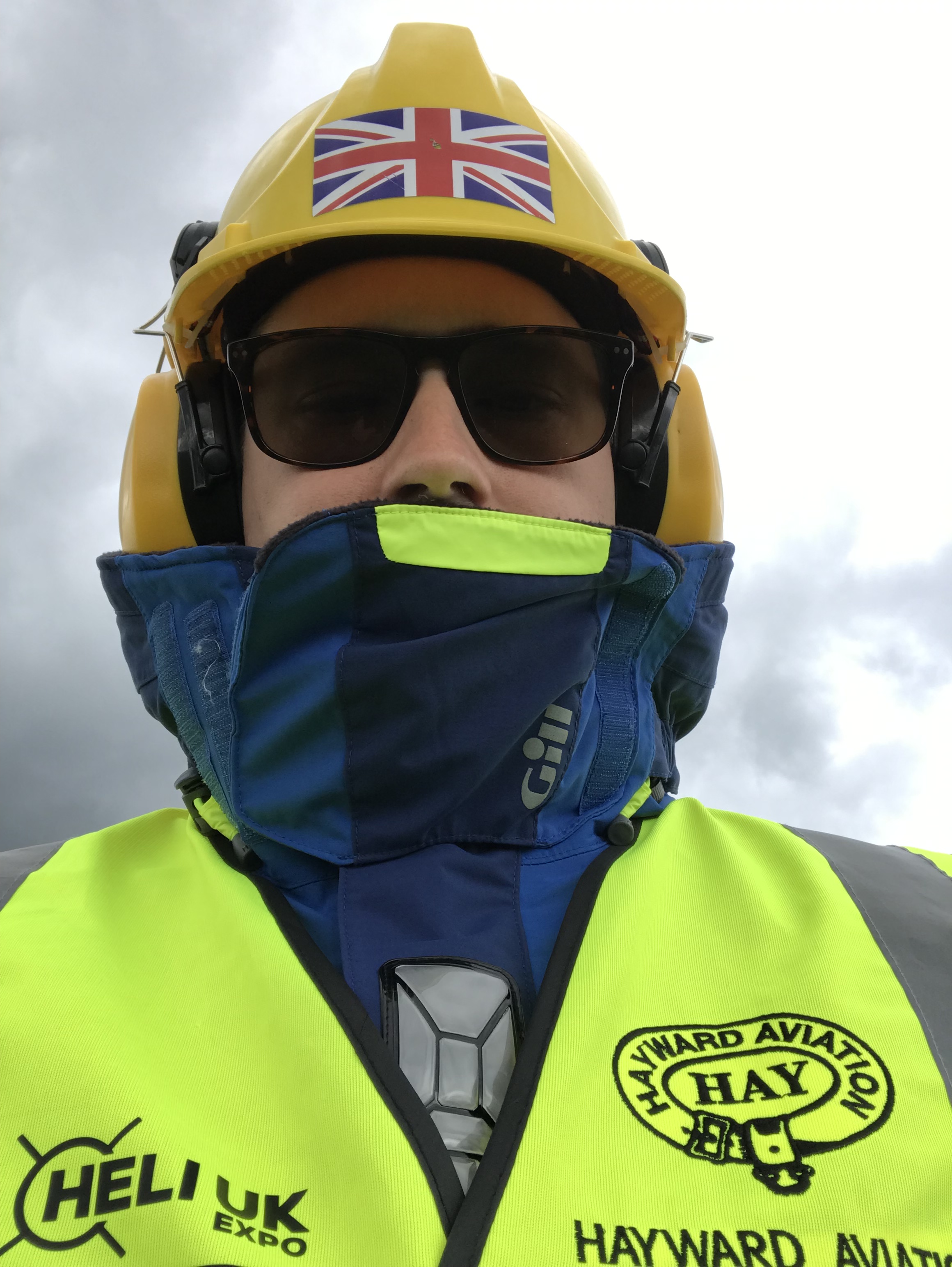
I had seen the Championships over the years when growing up, and was always in awe of the skill involved in that type of flying. As soon as I had my PPL(H) I was researching into how I could get involved and the HCGB was the first step. I managed to get hold of a copy of the FAI sporting rules for the events, and started planning how to practice.
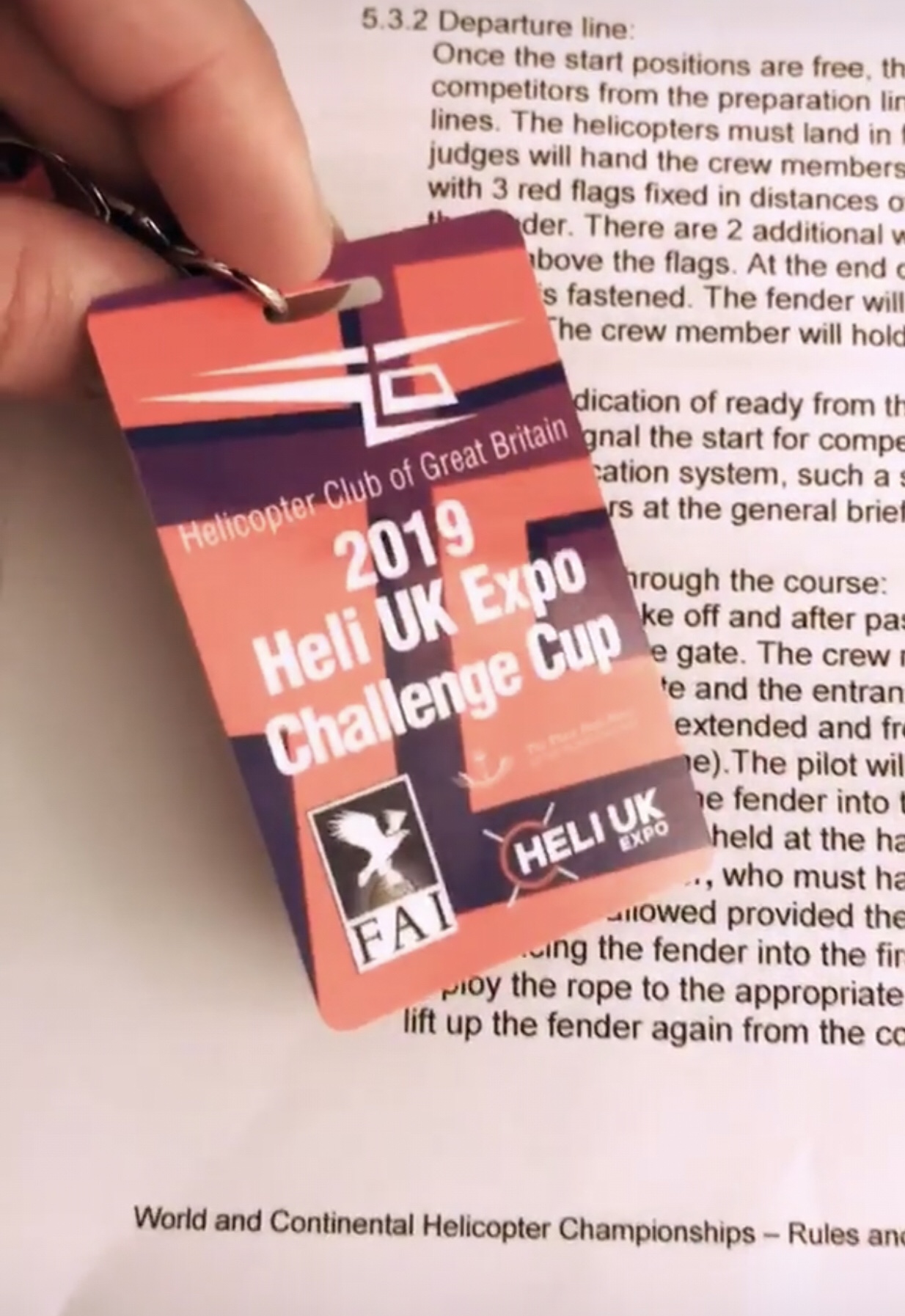
The first step was to read the rules and at the event I had been assigned to shadow a judge at the events of the Challenge Cup. On arrival though, I was thrust into my own judging position! I had read the rules over and over again by this point and I had great mentors, a very experienced Judge Colin Spence, as well as Head Judge Alan Norris to guide me through the first time! It was still very daunting, being in the HCGB Tent surrounded by the German, English, Polish and Ukrainian Championship crews, Weather stopped play for the first two days of the event, if it wasn’t rain it was wind outside of competition limits.

I won’t cover the championships in too much detail, as I think they deserve a separate post. However.. after the weekend I set-about buying all of the stuff I needed to make my own championship kit. I had spoken with my old flight school previously about competing in Uniform Charlie, and frankly it seemed a non-starter.
I had moved across to Heliflight UK now, and they couldn’t be more supportive about the practice. Their enthusiasm is always well received and I brought the kit up to the hangar, along with a copy of the championship rules. I spoke to the SATCO and Head of Ops at Gloucester and they were so helpful in allocating the entire of Heli Southwest for the agility practice. It all happened rather quickly, and before I knew it, I was booked out and the school had taken the door off the R22 in anticipation.
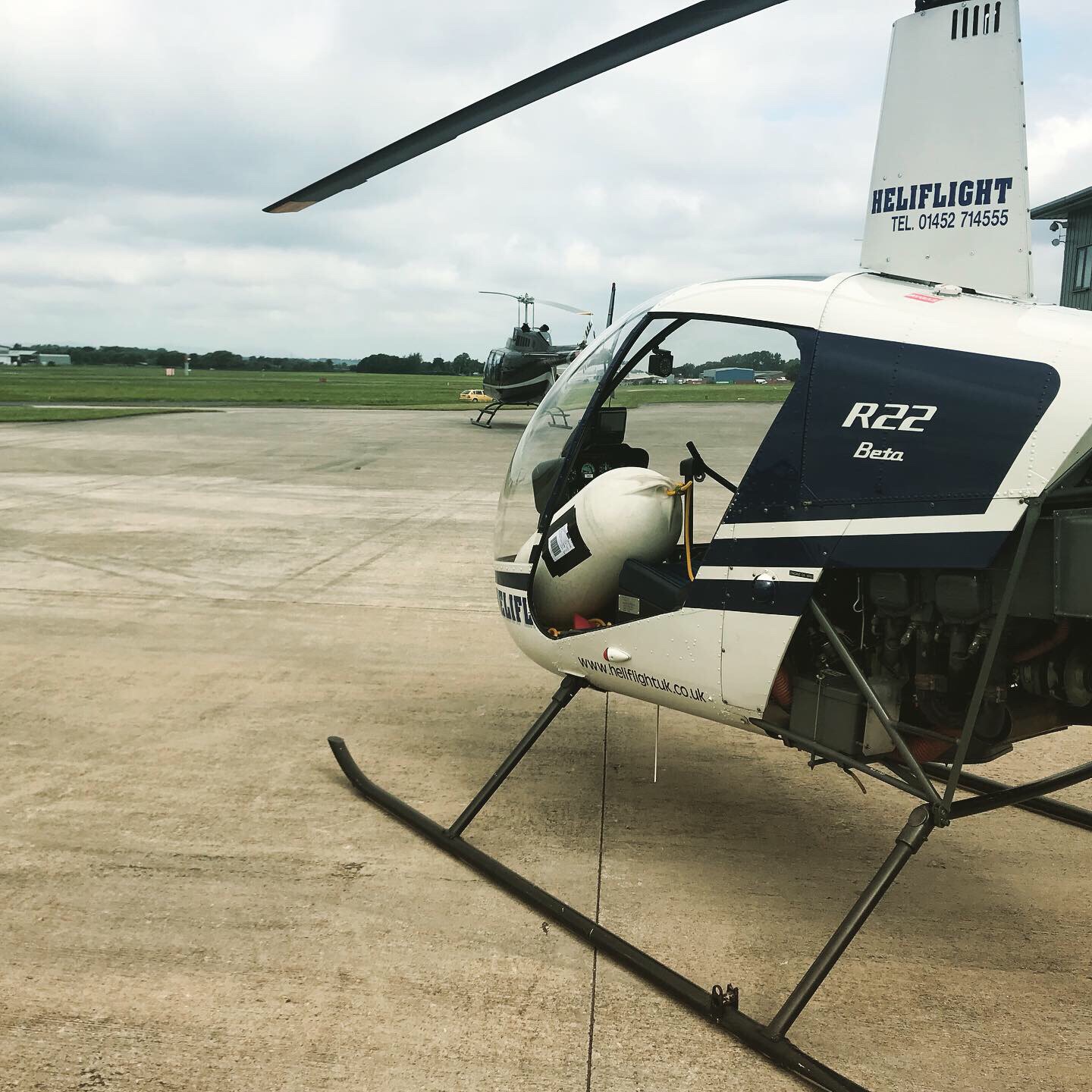
I scouted through the cockpit and removed any loose articles that remained, the last thing I wanted when doing high energy manoueuvres, was anything to leave the cockpit and hit the tailrotor. In this session, I would be practicing Fender Rigging, it is fundamentally a boat fender, on the end of an 8 metre rope. with sections to grip at 4 metres, 6 metres and 8 metres. The intention is to get the fender into the bucket at different rope lengths.. (may I add after the first practice it becomes evident this is about 80% down to the crewman!)
After bundling the crewman, and the fender along with 8m of yellow rope into the R22, I lifted and taxiied to Heli Southwest, where the 220 litre water butt was strategically placed. Starting on the ground and placing the fender out I pulled power slowly to see what the vertical performance was, it wasn’t a particularly warm day and we had around a 5/6 knot wind. Vertical performance didn’t afford me the luxury of getting the R22 high enough to lift the Fender clear of the ground whilst it was held at the 4m height.
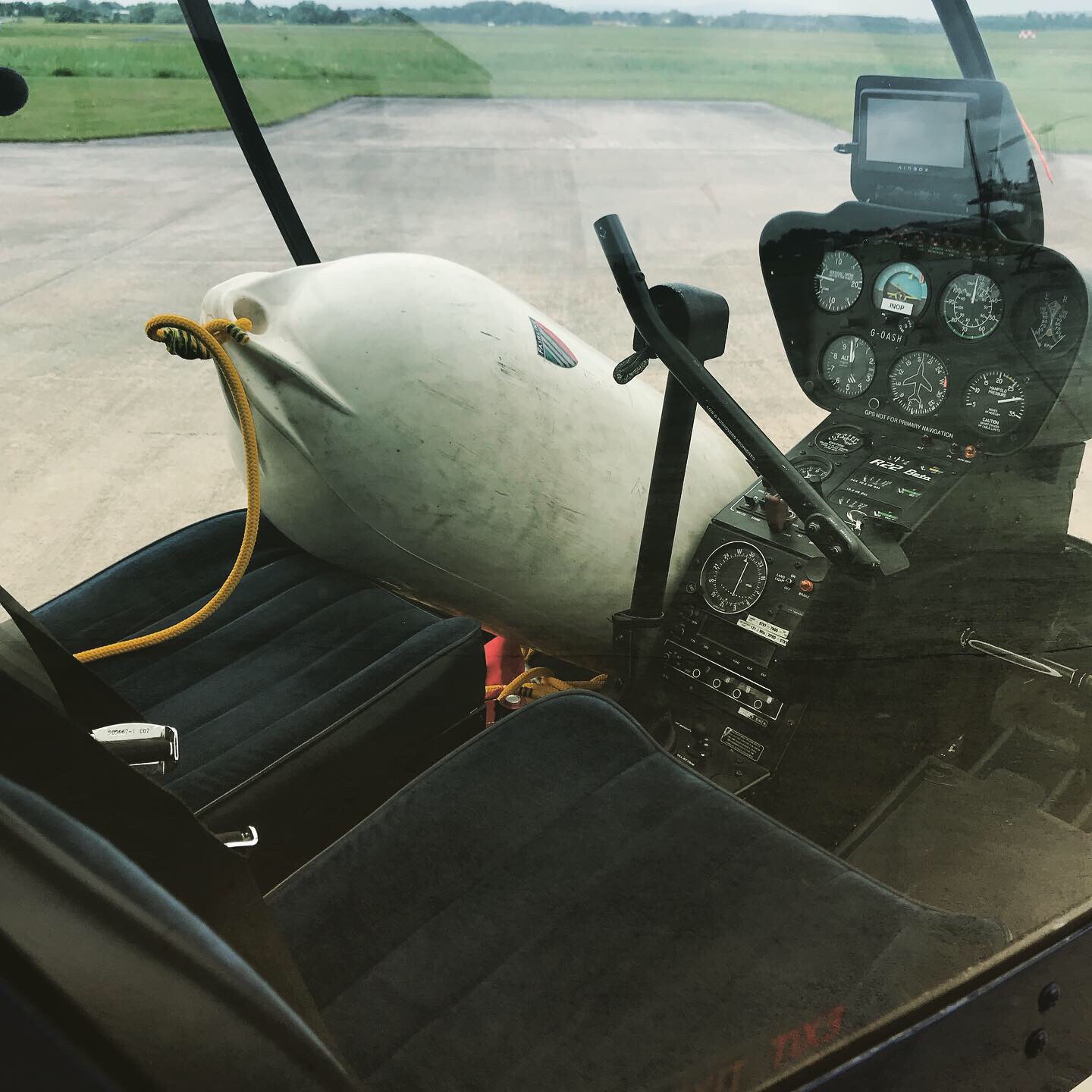
Plan B, I would gain translational lift and run in on the barrel, ending up into a high quickstop, nose into wind and holding the hover at that stage. This worked well and approaching at 30 knots with a slight flare as the barrel went through and under the centre console out of my line of sight seemd to be a better set up. I ensured the carb heat was away in order to get as much power as possible. 80% of the time the fender went into the barrel, from differing heights. As a first attempt I was pretty impressed with this.
Once the fender was in the barrel, I would put in a right pedal turn gently and come out of the high hover, gaining translational lift as quickly as possible and describing a large circle over the ground before running on to the barrel again. It was noted post-flight the the fender needs to be pulled as tight up to the helicopter as possible.. as forward flight at speed was forcing the fender rearwards toward the tailrotor. After around 0.6, the crewmans arm is about to fall off.. so we headed back to the apron to debrief.

What the immediate outcomes were:
- The flare adds little benefit to the whole process at this stage
- Anything more than 30kias on approach to the barrel is too much
- Power management is everything
- If using the R22, get a lightweight crewman and don’t put more than an hours fuel in
- Oh, and don’t let the fender go near the tailrotor.

 Hourbuilding Adventures